Showing posts with label History. Show all posts

Monday, June 2, 2014

Vintage Cookbooks Make Me Giggle

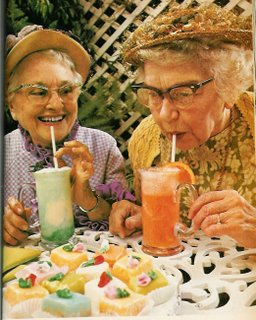
Ladies drinking smoothies in the 1950's: They are wearing hats! Love.
photo Courtesy of vintagecookbooks.blogspot.com
When I was researching the history of cookbooks, I came across some fairly hilarious pictures that I think are important for me to share.

If nothing else, these pictures will prove to you that American Cookery has come a long way, and that we can all be thankful to be living in an age where we can start Cookbook Clubs without fear of the content of the books.

Before I dispense with my self-imposed giggle fest, if you are a real vintage cookbook fan, I recommend that you visit Amy Alessio's site where she cooks from Vintage Cookbooks.

From Sophia Loren's In Cocina Con Amore Cookbook

Back in the 70s, it was cool to pretend like tossing pizza dough was easy.
Perfectly coifed hair, check. Makeup, check. Smile...well.

Actually this whole cookbook is a gem. Checkout this post from Swide for more pics!

The Jell-O Trend that lasted way too long

Adorable lady holding a ring of olives and meat slices in lime Jell-O.
Vintage Cooking at its finest
Courtesy of Living Out West
No seriously, this was a big trend. In fact here's a link to an awesome Jell-O Recipe. Are you wondering what you will make? Ring Around the Tuna!
Page from a Jell-O Cookbook circa 1970: Ring-Around-The-Tuna
Ring-Around-the Tuna: I know what I'll be eating tonight!
Photo Courtesy of Lakehouse Publishing

If you enjoy making fun of the surging Jell-O trend of the 1950's, 60's and 70's be sure to check out this post from Collector's Weekly, and this highly engaging Buzzfeed.
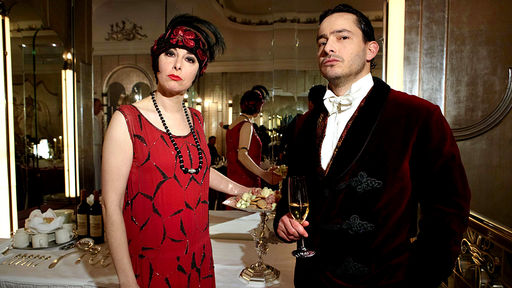
Are Sue Perkins and Giles Coren totally plastered throughout the show?
Yes, but don't be jealous. They have to eat really weird food.
Photo Courtesy of  Genevieve Valentine

I didn't give any credit to this show in my inagural post, but these Giles Coren and Sue Perkins are absolutely brilliant in this show.  They "travel" through time and reference the cookbooks of the day, all while making snarky comments with British accents in period costumes.  True Genius if I do say so myself.

Weiner Nation Cookbooks

1970's Hotdog Cookbook by Nathan's. It's only a little ridiculous
Hot Dog Ring with random greenery
I'll take mine with a glass of wine.
Photo Courtesy of Lola Vintage

For some reason (and I think it was a cheeky reason), hot dogs were all the rage in the 1970s.  As was candle salad which recently appeared in a Penzey's Spice Catalog.  Well done Penzey's (I do love their spices though)

Candle Salad: That's not phallic at all.
Photo Courtesy of TallSkinnyMom

Do you have any vintage cookbooks, recipes or pictures that make you giggle? Let me know in the comments section.


Saturday, May 24, 2014

A Brief history of Cookbooks

When I was first learned to cook at around the age of 12, I used Betty Crocker's Cookbook: New and Revised Edition (affiliate link) and I joyfully poured over the pages, imagining what delicacies I could make. Reading recipes transformed me into a domestic Goddess.  At least until I began cooking.
This is the cookbook that inspired my love of cooking!

Just this weekend I pulled out our well loved edition for some birthday cake inspiration, I realized that this particular cookbook was older than either me or my husband; it's a verifiable window into America's culinary past.  And I got to wondering, how old is the oldest cookbook? Do we really know how ancient people ate?

A brief history of cookbooks:

Ancient Cookbooks- Feasts for Pharaohs and grandiose gluttons:

Early Recipe collections were not for common people because most people weren't literate.  the recordings were more for vanity purposes than they were for everyday cooking.
 500 BC- Egyptians were among the first people to have a thriving agricultural based Civiliation.  As a result, some of humanities earliest recipes come from Ancient Egypt.  Where exactly? Early recipes are recorded on the tombs of Ancient Egyptian Officials “Here lies Cleopatra, and she does love flatbread; that’s why we’ve left some in the tomb.  By the way Ra, she likes it made this way”
400 AD- The first known cookbook “Apicius”or more appropriately “De re coquinaria” was written in Rome. book is named after Marcus Gavius Apicius, the world’s first gourmet and a most pretentious glutton.  The book describes an exotic meal including Flamingo and and six recipes devoted to truffles. Mr. Apicus certainly knew what he loved, although very few people could have enjoyed these recipes.  Not only were the ingredients prohibitively expensive, most people were still not literate.
I wrote cookbooks before cookbooks were cool.
1200 AD- The eating habits of rich Europeans are recorded in a two part volume of “Liber de Coquina” According to some folks at the Gode Cookery (Good Cooking for those unfamiliar with Medieval English), the habits of the aristocracy around this time were not so very different from our own.  Their translation of “Makerouns” (from “Forme of Cury” written 2 centuries later) makes me agree.  It’s basically Medieval Mac and Cheese.

Domestic Manuals- Putting housewives in the kitchen:

The Gutenberg printing press debuted in 1450 which lead to widespread literacy.  During this time cookbooks and recipe collections by and for women began to spring up.  

Mid 16th Century- Around this time, the first cookbooks that appear to be largely for non-aristocracy. The books weren't merely recipe collections; they included everything from tips on healthful eating (based around the four humors), medicine, feast preparation and seasonal eating as well as recipes. Books such as “A proper newe Booke of Cokerye”by Catherine Frances Frere and “The good Huswifes Handmaide for the Kitchin” have survived and been translated into modern English.
These particular books did not see widespread distribution, but their household manual format became the standard form for cookbook publishing.
Growing access to rich and exotic ingredients for non-Aristocrats, accompanied by a push for international cuisine and  high literacy levels during the early 18th century resulted in some of the most enduring cookbooks of all time, and pushed the cookbook to the in vogue status that it enjoys today.
The two most notable books of this type are:
1727 - “The Compleat Housewife” by Eliza Smith, was originally published in London but it proved to be equally as popular across the pond (Unlike King George III, the English cooking tradition certainly reigned supreme in the American colonies)
1747 – Thanks to an emerging new American food culture, Hannah Glase wrote the first specifically American cookbook “The Art of Cookery Made Plain and Easy” an All-American instruction manual for shopping, cooking, household management, and medicine. 

The scientific revolution... in your kitchen:

By the turn of the century, the scientific revolution was in full swing, and the leading culinary minds of the era fully adapted the scientific method in the kitchen in an effort to elevate the culinary arts into the culinary sciences.
1896 – Original 1896 Boston Cooking-School Cook Book (affiliate) by Fannie Farmer remains the most famous cookbook that treated cooking as a science rather than an art.  Farmers work is known for having a very rigorous recipe writing style, much more like a chemistry lab write up than a warm teacher in the kitchen. In her preface, Farmer wrote "It is my wish that it may not only be looked upon as a compilation of tried and tested recipes, but that it may awaken an interest through its condensed scientific knowledge which will lead to deeper thought and broader study of what to eat."

It's not cooking, it's science.

She looks so innocent in that pink dress, but watch out, this cookbook is rigorous!

Cookbooks shift from science to art and celebrity personalities:

1931- Irma Rombauer published Joy of Cooking (affiliate), a book that she originally wrote to help her cope with her husband's suicide. Rombauer makes a decided shift from the scientific method and focuses much more on infusing cooking with friendship, love and a little cheeky flair. She had no credentials when she wrote the Joy of Cooking, but thanks to her winning recipes and personality the book (revised 8 times) has been in continuous publication since 1936.


The original cover for The Joy Of Cooking featured St. Martha of Bethany (patron saint of cooking), slaying a dragon.

1960- No history of cookbooks would be complete without the inclusion of Julia Child's famous Mastering the Art of French Cooking (affiliate).  No book has ever been so loved, nor so seldom cooked from simultaneously. Julia Child was the first ever TV chef, and she inspired many people to cook outside their comfort zone.  However, Mastering the Art of French Cooking is famously full of extremely complex recipes.  Do you dare to take on some of the daunting recipes from this seminal work?

Today's celebrity chefs such as Bobby Flay, Emeril Laggasi, Paula Deen, and Rachel Ray can largely contribute their success to the pattern that Julia Child laid forth for them.

It's a famous cookbook, but have you ever cooked anything from it?

Cookbook Communities- How blogs have revolutionized cookbooks:

2009- The Pioneer Woman Cooks: Recipes from an Accidental Country Girl is one of the best known blog to cookbook success stories.  Ree Drummond who blogs under the name, The Pioneer Woman, built an online community of followers who crave her recipes and her unique voice and personality.  

Her supportive community was already in place prior to publishing the cookbook.  Unlike earlier celebrity chef personalities, the success of her print cookbooks was not due to TV or restaurant fame.  Rather, her dedicated online followers took hold of this book onto the best selling list which has subsequently allowed Drummond to publish two more cookbooks and a variety of childrens books. For Drummond and other bloggers, creating a genuine online community is one of the most important methods to ensure the success of their cookbooks.